
What to Avoid During Pregnancy: Foods, Substances, and Risks That May Be Overlooked
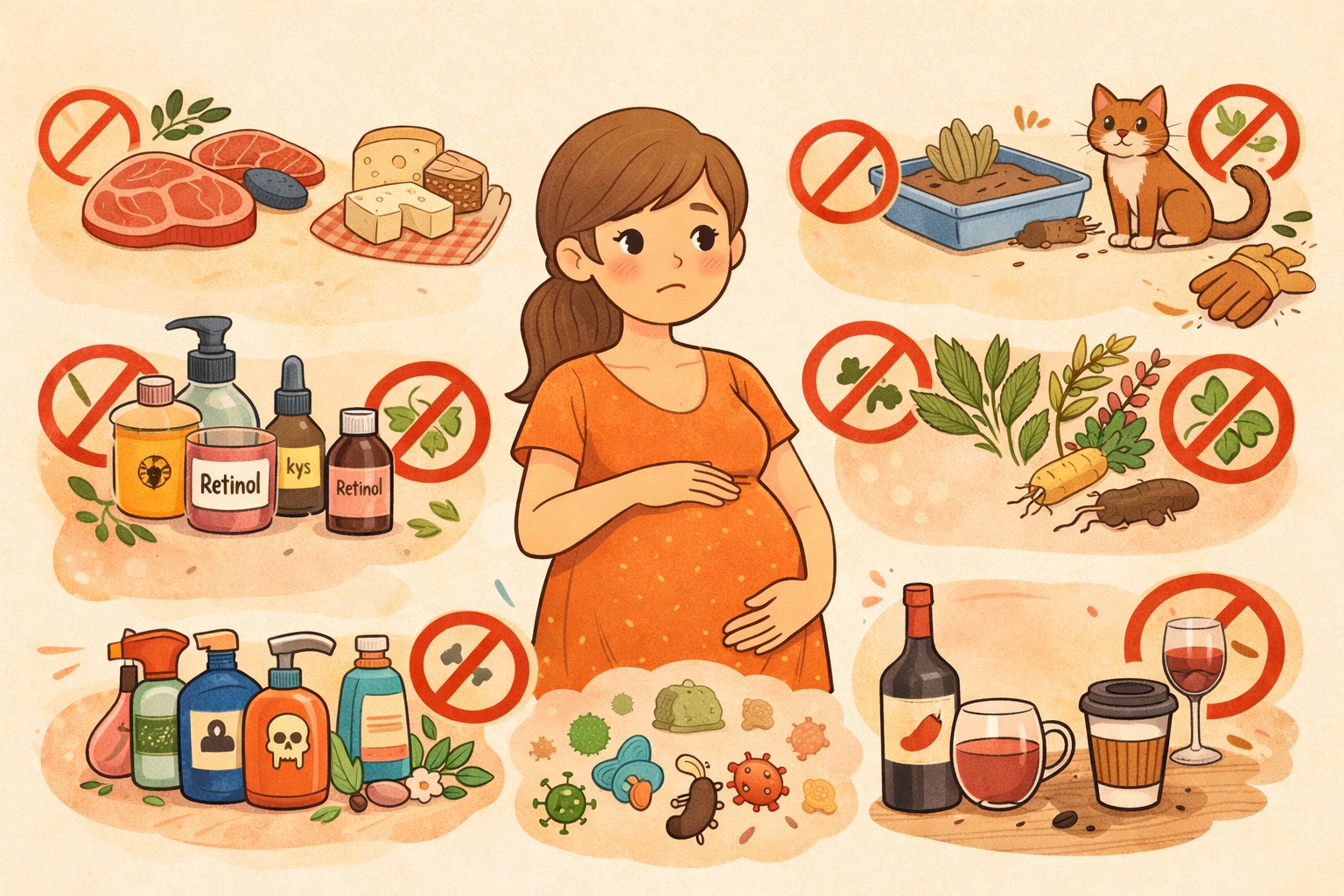
Pregnancy is a period when attention naturally focuses on healthy nutrition and lifestyle. In addition to well-known risks such as alcohol or smoking, there are many less obvious factors that can affect fetal development. These mainly include certain foods, infections, cosmetic substances, and herbs.
The good news is that most risks can be easily minimized if a woman knows what to watch out for.
Foods That May Pose a Risk of Infection
During pregnancy, the immune system is naturally weakened, and some microorganisms can cause serious complications. The most common are listeriosis and toxoplasmosis, which can affect fetal development.
Foods Risky in Terms of Listeriosis
Listeriosis is a bacterial infection that can lead to miscarriage, premature birth, or infection in the newborn. The bacterium Listeria monocytogenes can multiply even in a refrigerator.
It is recommended to avoid:
- unpasteurized dairy products
- soft cheeses made from unpasteurized milk (e.g., camembert, brie, blue cheese)
- pâtés and meat spreads
- smoked fish stored in the refrigerator
- ready-to-eat chilled meals with a long shelf life
- undercooked meat
Practical tip:
Always cook food thoroughly and maintain good hygiene when handling food.
Foods Risky in Terms of Toxoplasmosis
Toxoplasmosis is a parasitic infection that can damage the fetal nervous system and eyesight. It is most commonly transmitted through raw meat or contaminated soil.
Risk factors include:
- raw or undercooked meat
- steak tartare
- insufficiently cooked meat
- unwashed fruits and vegetables
- contact with cat feces or garden soil without gloves
Important:
If a woman has had toxoplasmosis in the past, she usually has developed immunity.
Cytomegalovirus (CMV): A Less Known but Significant Risk
CMV is a virus from the herpes virus family and is among the most common congenital infections. It is mainly transmitted through bodily fluids — saliva or urine — often from young children.
The risk is higher especially in women who:
- work with children
- have a small child at home
- come into contact with children’s saliva or diapers
Prevention includes:
- thorough hand washing after contact with children’s saliva or urine
- not sharing dishes or utensils with young children
- avoiding kissing children on the mouth
CMV often has no symptoms, which is why prevention is crucial. However, if you have had CMV in the past, the risk to the baby is significantly lower, as most complications are associated mainly with primary infection during pregnancy.
Substances in Cosmetics and Medications to Avoid
Some active ingredients used in cosmetics or dermatological products may be unsuitable during pregnancy, especially substances that are absorbed through the skin.
Retinoids (retinol, tretinoin, isotretinoin)
Retinoids are derivatives of vitamin A used in anti-acne or anti-wrinkle creams. In higher doses, they can cause serious developmental defects in the fetus.
It is recommended to avoid:
- creams containing retinol
- strong anti-aging products
- dermatological acne medications containing retinoids
Salicylic Acid (in High Concentrations)
Salicylic acid is a common ingredient in acne cosmetics or chemical peels. In small concentrations it is usually safe, but high doses or extensive skin application are not recommended during pregnancy.
Extra caution is needed with:
- chemical peels
- strong dermatological preparations
- products with a high percentage of the active ingredient
Other Substances Requiring Caution
- hydroquinone
- formaldehyde
- some essential oils in high doses
- high doses of vitamin A
- certain acne or pain medications
Always check the composition of cosmetics and consult a doctor or pharmacist if unsure.
Herbs and Plants That May Be Unsuitable During Pregnancy
Although herbs are natural, some can stimulate uterine contractions or affect hormonal balance.
Caution is recommended especially with:
- sage
- aloe vera (in supplement form)
- ginseng
- St. John’s wort
- rosemary in high doses
- wormwood
- thyme in high doses
- certain detox or “cleansing” teas
Herbal tinctures should not be used automatically without consulting a professional.
Chemical Substances and the Environment
Some chemicals may negatively affect fetal development, especially with long-term exposure.
Pay particular attention to:
- pesticides
- solvents
- strong cleaning agents
- paints and varnishes
- cigarette smoke
- mercury (e.g., in large predatory fish)
If possible, use protective gloves and ventilate the room.
Alcohol and Caffeine: Well-Known but Still Important Risks
These risks are known to most pregnant women but remain among the most frequently discussed topics.
Alcohol
Alcohol passes through the placenta directly to the fetus and can affect brain and nervous system development.
The safest recommendation is:
completely avoid alcohol during pregnancy
Caffeine
Caffeine is found not only in coffee but also in tea, cola drinks, energy drinks, and chocolate.
Recommended maximum:
approximately 200 mg of caffeine per day
(about 1–2 cups of coffee)
During pregnancy, it is important to pay attention not only to diet but also to infections, cosmetic substances, and herbs. Among the most common risks are foods associated with listeriosis and toxoplasmosis, certain active ingredients in cosmetics (such as retinoids), selected herbs, and contact with infections such as cytomegalovirus.
Awareness and simple preventive measures can significantly contribute to a safe pregnancy.